October 12, 2026


Three puddings can begin with almost the same pot of milk, sugar, and vanilla and finish as three completely different desserts. The flavoring is rarely the deciding factor. The thickener is. Cornstarch, gelatin, and eggs each build structure in their own way, and that choice determines how the pudding feels on the spoon, how long it holds in the fridge, and whether it survives the freezer.
Here's how each one works, what it does to texture, and how to pick the right one without guessing.
Cornstarch thickens by gelatinizing. When starch granules meet hot liquid, they swell, absorb water, and eventually burst, releasing starch molecules that trap liquid in a soft, opaque network. That network really forms at a full boil — around 95°C / 203°F — which is why a cornstarch pudding that only ever simmers stays soupy no matter how long you cook it.
Practical amounts: roughly 1 tablespoon per cup of liquid for a thin dessert sauce, 2 tablespoons per cup for a spoon-coating pudding. Always whisk the cornstarch into cold liquid first, or make a slurry with a little water, before it meets heat. Dump it straight into hot milk and you'll be chasing lumps for the next ten minutes.
What you get is a silky, dairy-forward texture with no egg flavor and no wobble. Chocolate pudding, butterscotch, lemon pudding, and most vegan coconut puddings lean on it hard.
What to watch: prolonged boiling, aggressive stirring after it sets, and acidic additions all weaken the gel. Freezing breaks it down too, so cornstarch puddings turn spongy and weep liquid when thawed. It's vegetarian, gluten-free, and forgiving, but it wants to be eaten within a few days.
Gelatin is a protein that behaves nothing like starch. It has to be bloomed first — sprinkled over cold water and left for about five minutes until it looks like applesauce — then dissolved in a warm liquid. Keep that liquid below a hard boil; a long rolling boil degrades the protein and gives you a weak set.
Once chilled, gelatin forms a thermoreversible gel. It sets firm at refrigerator temperatures and melts again at roughly body temperature, which is exactly why a good panna cotta seems to dissolve the instant it hits your tongue. Nothing else produces that clean, elastic jiggle.
Use it for panna cotta, Bavarian cream, molded milk puddings, and layered desserts where you want sharply defined edges. Watch out for fresh pineapple, papaya, kiwi, and figs — their enzymes chew through gelatin and prevent setting. Canned or cooked versions of those fruits are fine. Gelatin is also animal-derived, so if that's a concern, agar-agar is the usual substitute; it sets firmer and more brittle, and it won't melt in your mouth the same way.
Eggs thicken through coagulation. As the proteins heat, they unfold and link together, trapping liquid in a delicate mesh. Yolks alone give the richest, silkiest result; whole eggs set a little firmer and more sliceable.
The trick is temperature control. Custards thicken nicely between about 77°C and 82°C / 170°F and 180°F, and scramble not far above that. That's why tempering matters: whisk a ladle of hot milk into your beaten eggs first, then return everything to the pot over low heat, stirring constantly. A thermometer removes the guesswork.
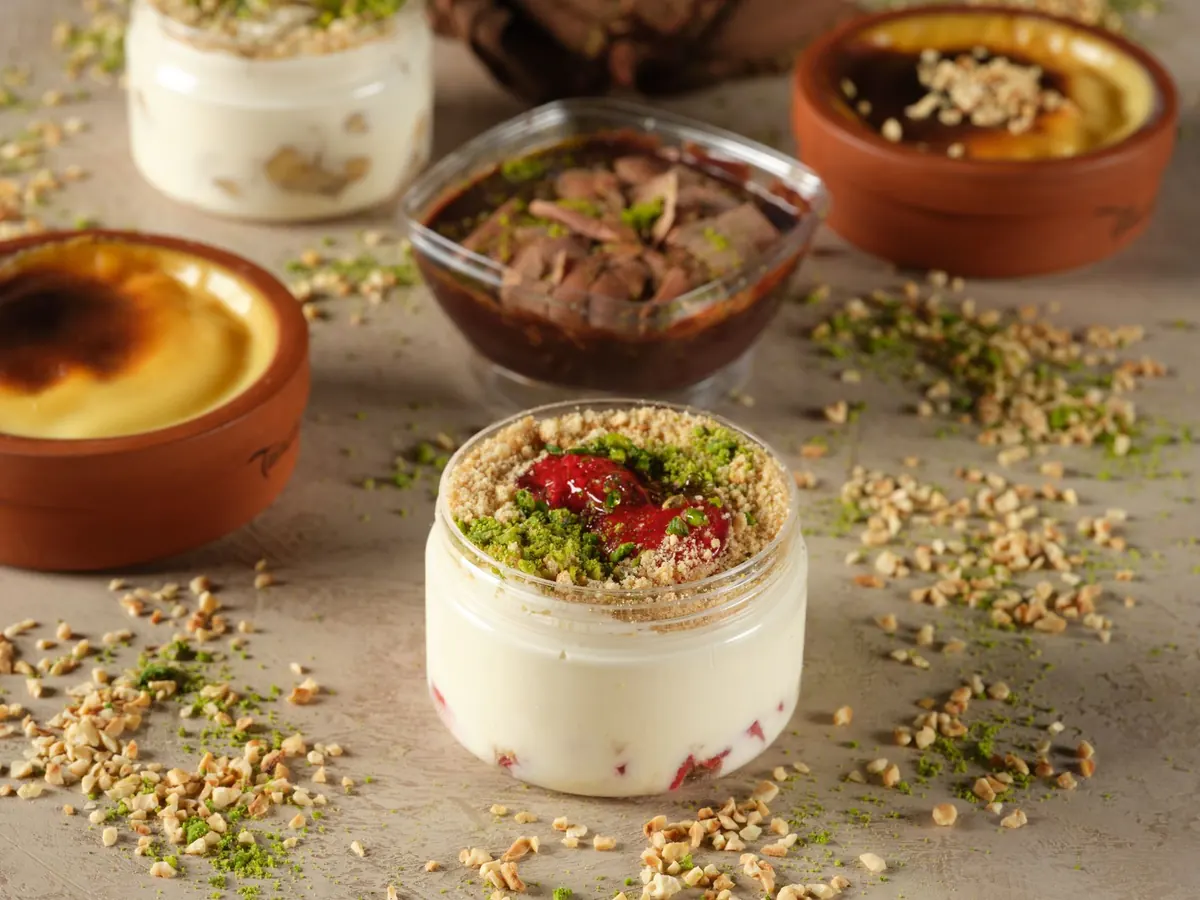
Egg-thickened puddings — crème brûlée, pastry cream, chocolate pot de crème, bread pudding — have a body and richness the other two can't match. They also demand the most attention. Curdle them and you've got grainy pudding; strain it through a fine sieve and it's often salvageable.
Some of the best puddings use more than one. Pastry cream typically pairs cornstarch with egg yolks: the starch adds stability so the custard can be brought to a boil without curdling, while the yolks supply richness. A sliceable lemon pie filling often combines cornstarch with a little gelatin so it cuts cleanly but still tastes creamy. And molded custards like Bavarian cream use gelatin to set a base that's already thickened and flavored with egg yolks.
When you combine them, add the cornstarch first and let it do its work, then fold in bloomed gelatin off the heat. Adding gelatin to a boiling pot undoes the bloom you just built.
Push it through a fine sieve while still hot, then whisk. Next time, whisk the starch into cold liquid and stir constantly through the first minute of boiling.
Pull it off the heat immediately and plunge the pot into an ice bath, stirring. If it's still grainy, blend it briefly — the texture becomes smooth, though slightly thinner than intended.
Too much gelatin, not enough liquid. It can't be reversed in the same batch, but you can gently melt it back down and whisk in more warm liquid before chilling again.
Usually a sign of overcooked starch or a long stay in the fridge. Press plastic wrap directly onto the surface while it cools to limit skin and moisture loss.
Reach for cornstarch when you want a simple stovetop pudding, a vegan version, or a filling that comes together in fifteen minutes. Choose gelatin when the shape matters — unmolded, layered, sliceable, or jiggly. Choose eggs when the dessert should taste rich and custardy above all else, and you don't mind standing at the stove with a whisk and a thermometer.
If you're new to pudding making, start with cornstarch, get comfortable with the boil, then move to a pastry cream. Once you've made those two, gelatin desserts will feel straightforward — and you'll have a good instinct for how each thickener behaves before you ever open the fridge to check the set.
Photo: Orhan Pergel / Pexels
Exploring sweet desserts and curious pudding recipes.
Copyright © 2026 Curious Pudding. All rights reserved. Curious Pudding.